Transport Companies in India: How Modern Logistics Is Powering Business Growth
- Transport companies in India help businesses move goods through road, rail, air and multimodal networks.
- Modern sellers need more than transportation; they need visibility, speed and reliability.
- Traditional transport challenges include limited tracking, manual coordination and delivery delays.
- Choosing the right logistics partner can improve operational efficiency and customer experience.
- Technology-driven logistics solutions help sellers manage shipping, freight movement and returns from a single place.
- Platforms like Shiprocket Cargo combine transportation with digital tools that support business growth.
- What Are Transport Companies?
- Types of Transport Companies
- Key Services Offered by Transport Companies in India
- Challenges Faced by Businesses Using Traditional Transport Companies
- What Sellers Should Look for in Transport Companies
- Transport Companies vs Modern Logistics Expectations
- Why Transport Companies in India Are Evolving Rapidly
- Shiprocket Cargo: Modern Solution for Transport in India
- Conclusion
For a growing online seller, reaching customers beyond your local market can open up new business opportunities. But as your orders increase, moving products safely and on time becomes just as important as selling them. Transport companies in India help businesses manage this movement by connecting warehouses, suppliers and customers across different locations.
However, sellers need more than just transportation. Delayed updates, limited shipment visibility and manual coordination can affect delivery performance and customer experience. Modern logistics solutions are changing how businesses manage freight by bringing together tracking, reliability and smoother operations.
In this blog, we explore how transport companies are evolving and what sellers should look for to scale efficiently.
What Are Transport Companies?
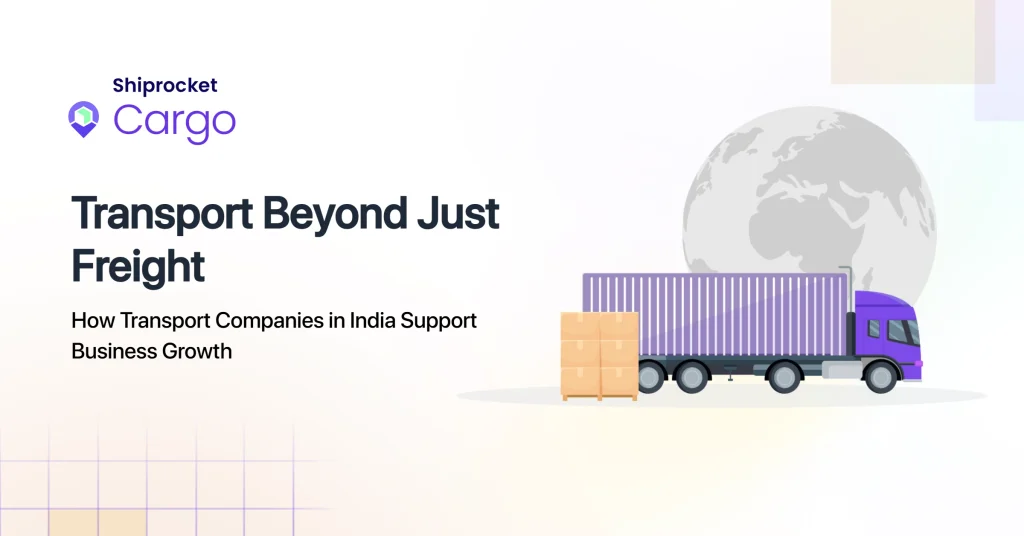
Transport companies are businesses that move goods from one location to another using different modes of transportation, such as road, rail, air or sea. They connect manufacturers, distributors, warehouses, retailers and eCommerce sellers to ensure products reach their intended destinations efficiently.
For businesses, transport companies help maintain a smooth supply chain by moving inventory from suppliers to warehouses, distribution centers or customers. This makes them an important part of daily operations, especially for sellers shipping products across multiple locations.
While transportation is their core function, many businesses today also seek additional logistics support, including shipment tracking, warehousing and freight management, to improve visibility and efficiency.
Types of Transport Companies
The mode of transportation categorises transport companies by the mode they use to move goods. Each type serves different business needs depending on shipment size, delivery timelines and destination.
- Road Transport Companies
Road transport companies handle the majority of freight movement in India due to their flexibility and wide reach. They support door-to-door deliveries and are commonly used for:
- Interstate freight movement
- Regional deliveries
- eCommerce shipments
- Full truckload (FTL) and less-than-truckload (LTL) transportation
- Rail Freight Operators
Rail freight operators transport large volumes of goods over long distances. They are commonly preferred for bulk shipments where cost efficiency is important.
Common use cases include:
- Raw materials
- Industrial products
- Agricultural commodities
- High-volume cargo movement
- Air Cargo Providers
Air cargo providers specialise in faster transportation for shipments where delivery speed is a priority.
Businesses often use air freight for:
- Urgent inventory movement
- High-value products
- Perishable goods
- Long-distance shipments with shorter timelines
- Coastal and Inland Water Transport Providers
Water transport providers move heavy and bulk cargo through coastal routes and inland waterways. They are mainly used for large shipments that do not require quick delivery.
- Multimodal Transport Providers
Multimodal transport companies combine different transportation modes, such as road, rail, air or water, to improve efficiency and manage costs.
For growing businesses, multimodal logistics can offer greater flexibility by balancing speed, reach and transportation costs.
Key Services Offered by Transport Companies in India
Transport companies in India provide a range of services that help businesses move, store and manage goods efficiently.
Beyond transportation, many providers now support different parts of the logistics process, helping sellers improve speed, visibility and delivery operations.
- Freight Transportation: Freight transportation is the primary service offered by transport companies. It involves moving goods between locations by road, rail, air or multimodal networks, based on shipment requirements.
- Full Truckload (FTL) Services: FTL services involve using an entire vehicle for a single business’s shipment. This option is suitable for sellers or businesses moving large volumes of goods that require dedicated transportation.
- Less Than Truckload (LTL) Services: LTL services allow multiple businesses to share space in a single vehicle. This helps sellers move smaller shipments while reducing transportation costs.
- Warehousing Support: Many logistics providers offer warehousing facilities where businesses can store inventory closer to customers or demand centers. This helps improve order fulfillment speed and inventory management.
- Shipment Tracking: Digital tracking allows businesses to monitor shipment movement in real time. It improves visibility, helps identify delays and enables better delivery planning.
- Reverse Logistics: Reverse logistics manages the movement of products from customers back to sellers. It is especially important for eCommerce businesses handling returns and exchanges.
- Distribution Management: Distribution services help businesses plan and manage the movement of goods across multiple locations. This supports smoother inventory movement and wider market reach.
- Cargo Insurance: Cargo insurance helps protect shipments against risks such as damage, loss or theft during transit, reducing potential business losses.
Challenges Faced by Businesses Using Traditional Transport Companies
While transport companies play an important role in moving goods, traditional transportation models may create challenges for growing businesses that need faster, more transparent and scalable operations.
- Limited Shipment Visibility
Many businesses still depend on manual updates, phone calls and spreadsheets to track shipments. Without real-time visibility, sellers may struggle to plan inventory, manage delays and provide accurate delivery updates.
- Delivery Delays
Manual coordination, route inefficiencies and unexpected disruptions can affect delivery timelines. Delays in transportation can impact stock availability and customer experience.
- Unclear Pricing and Cost Management
Traditional transport processes may involve manual quotations and limited cost visibility, making it difficult for businesses to predict expenses and manage logistics budgets effectively.
- Managing Multiple Vendors
Businesses often need separate partners for transportation, warehousing, tracking and returns. Coordinating multiple providers can increase operational effort and create communication gaps.
- Limited Scalability
As order volumes increase, manual processes can become difficult to manage. Sellers may face challenges during peak seasons, sales events or when expanding to new markets.
- Documentation and Process Challenges
Manual paperwork and offline processes can slow down operations, increase administrative work and lead to errors in shipment handling.
What Sellers Should Look for in Transport Companies
Choosing the right transport partner can directly impact your delivery performance, customer experience and business growth.
Before selecting a provider, consider these key factors:
- Network Coverage: A reliable transport partner should have strong reach across your target markets. Wider coverage helps you expand beyond local customers and deliver products efficiently across locations.
- Delivery Reliability: Consistent delivery performance is important for maintaining customer trust. Look for providers that can meet timelines and handle shipments efficiently.
- Real-Time Tracking: Shipment visibility allows you to monitor deliveries, identify delays and plan operations more effectively. Tracking tools also help you keep customers updated.
- Transparent Pricing: Clear pricing helps you manage logistics costs effectively. A good transport partner should provide visibility into charges and avoid unexpected costs.
- Technology Capabilities: Digital tools such as shipment tracking, automated updates and platform integrations can simplify logistics management and reduce manual effort.
- Reverse Logistics Support: Returns are an important part of eCommerce operations. Efficient reverse logistics helps sellers manage returns more smoothly and improve the customer experience.
- Scalability: Choose a transport partner that can support your growing shipment volumes, seasonal demand and expansion into new markets.
Transport Companies vs Modern Logistics Expectations
Business requirements have evolved beyond simply moving goods from one location to another. Sellers today expect logistics partners to provide better visibility, faster operations and end-to-end support.
| Traditional Transportation | Modern Logistics Expectations |
| Focused mainly on goods movement | End-to-end logistics support |
| Manual shipment updates | Real-time shipment visibility |
| Limited tracking and reporting | Data-driven insights and monitoring |
| Multiple service providers | Integrated logistics solutions |
| Basic transportation support | Fulfillment and returns management |
| Offline coordination | Digital logistics management |
Why Transport Companies in India Are Evolving Rapidly
Transport companies in India are adapting to meet the growing needs of businesses that require faster deliveries, greater visibility and more efficient logistics operations.
- Growth of eCommerce
The expansion of eCommerce beyond major cities has increased demand for reliable transportation networks. Sellers now need logistics partners that can support wider customer reach and faster deliveries.
- Rising Delivery Expectations
Faster delivery timelines have become an important part of business success. Transport providers are improving their networks and processes to help businesses meet changing delivery expectations.
- Digital Transformation
Technology is helping transport companies improve operations through real-time tracking, automated updates and better shipment management. These tools give businesses more visibility and control over their logistics.
- Infrastructure Development
Improved roads, freight corridors and logistics infrastructure are strengthening goods movement across the country. Better connectivity helps reduce delays and supports smoother supply chain operations.
- Growing Need for Integrated Logistics
Businesses increasingly prefer logistics partners that offer multiple services, such as transportation, tracking and fulfillment support. This shift is encouraging transport companies to move towards more integrated logistics solutions.
Shiprocket Cargo: Modern Solution for Transport in India
As logistics requirements become more complex, sellers need more than just transportation. They need solutions that simplify freight movement, improve visibility and help them manage growing shipment volumes efficiently.
Shiprocket Cargo helps businesses manage freight transportation through a technology-enabled platform, bringing better control and convenience to logistics operations.
- Simplified Freight Management: Shiprocket Cargo helps sellers manage freight operations from a single platform, reducing manual coordination and simplifying shipment management.
- Wider Reach: With access to reliable transportation solutions, sellers can expand their business across regions and reach more customers without increasing logistics complexity.
- Real-Time Visibility: Shipment-tracking capabilities help sellers monitor cargo movement, identify delays and make better decisions throughout the delivery process.
- Technology-Driven Operations: Digital tools simplify freight management by reducing manual processes, improving coordination and providing better operational visibility.
- Built for Growth: As shipment volumes increase, sellers can manage logistics more efficiently with solutions designed to support business expansion.
Conclusion
Transport companies are no longer just about moving goods; they are becoming an important part of business growth. For sellers, the right logistics partner can mean better reach, smoother operations and fewer delivery challenges. As your business expands, prioritising visibility, reliability and scalable solutions can help you stay competitive.
Modern logistics platforms like Shiprocket Cargo help bridge this gap by combining transportation with technology, making freight management simpler and more efficient.
Transportation costs depend on shipment size, distance, delivery timelines, fuel prices, route requirements and the type of transportation service selected.
Sellers can reduce delays by planning inventory more effectively, choosing reliable logistics partners, using tracking tools and improving coordination across supply chain operations.
Warehousing helps sellers store inventory closer to demand areas, reducing delivery time and improving order fulfillment efficiency across locations.
Transport companies help businesses enter new markets by providing wider delivery networks, regional connectivity and logistics support to increase shipment volumes.
The choice depends on business needs. A single integrated partner can simplify management, while multiple providers may suit specialised requirements.