- Truck transportation stands out as one of the main costs in Indian logistics.
- The charges depend on the demand, fuel, tolls, cargo weight and on the distance.
- FTL stands out as an affordable option for bulk cargoes, and PTL is well-suited for smaller loads.
- Platforms, such as Shiprocket Cargo, can simplify the bulk cargo movement for the sellers.
- What Are the Standard Truck Transportation Charges in India?
- What Are the Different Factors That Affect Truck Transportation Costs?
- What Is the Difference Between Full Truck Load (FTL) vs Part Truck Load (PTL) Pricing?
- How to Calculate Truck Transportation Charges
- What Are Some Tips for Sellers to Reduce Transportation Costs?
- How to Choose the Right Transport Service for Your Business?
- Revolutionise Bulk Freight with Shiprocket Cargo
- Conclusion
Truck transportation charges play a crucial role in how sellers manage pricing and shipping costs, whether running a small online shop or handling bulk orders. Transport expenses can directly impact margins, making logistics one of the most significant cost components in operations.
In fact, India’s logistics cost stood at 7.97% of GDP in 2023–2024, showing how critical transportation is for businesses nationwide. For smaller sellers, this share can be even higher, reaching up to 16% of total output. Understanding how truck freight is calculated helps you reduce unnecessary spending, negotiate better rates and plan shipments more efficiently.
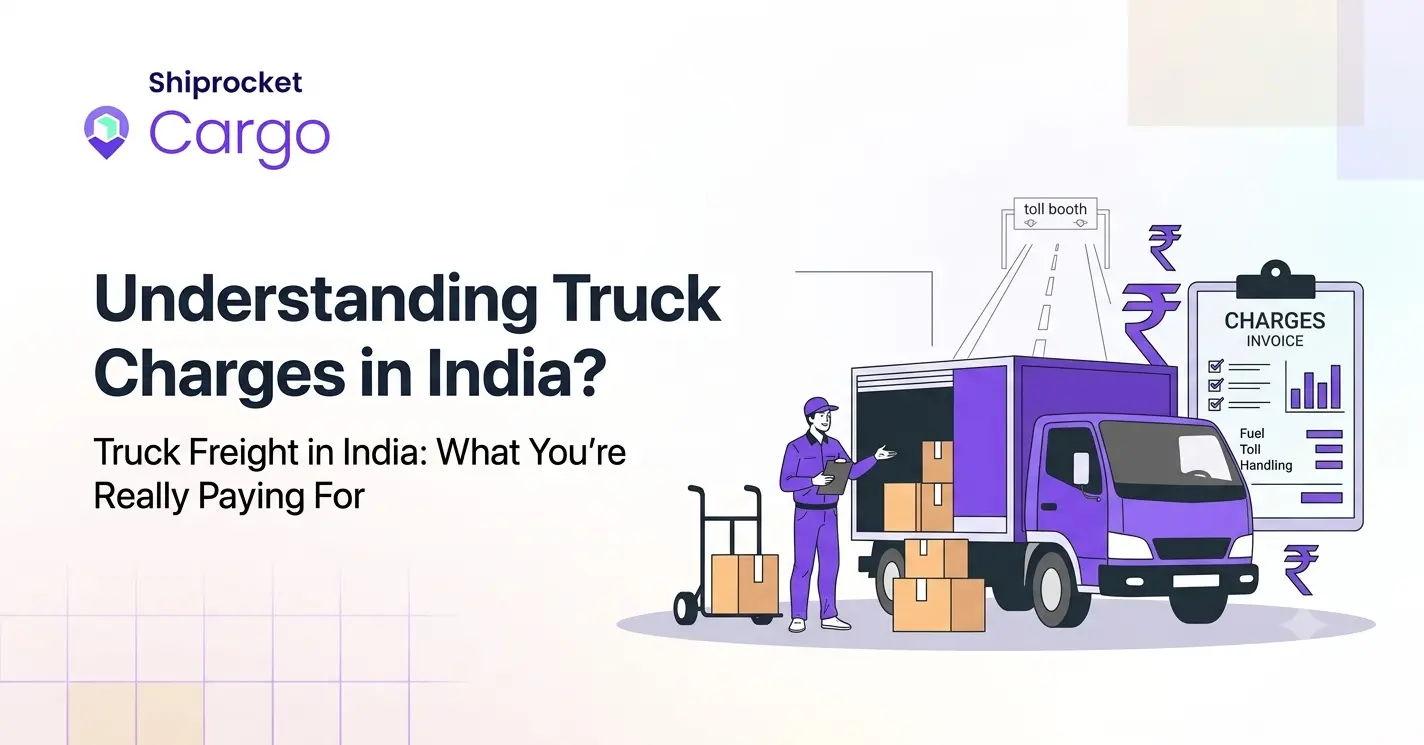
What Are the Standard Truck Transportation Charges in India?
Truck-based transportation costs are not fixed. They vary based on load, route and vehicle type. Here is an average general range:
- Mini trucks (Tata Ace) can charge between ₹10 and ₹25 per km.
- Medium trucks (14 ft) can charge between ₹18 and ₹35 per km.
- Large trucks (17ft to 22ft) can charge between ₹22 and ₹40 per km.
Apart from distance-based pricing, other common charging models include:
- Contract pricing for periodic shipments
- Flat rates for specific routes
- Per kg pricing for smaller shipments
Road transportation is widely used in India, even though it is more expensive than rail. The average road transportation cost is around ₹11.03 per tonne per km, which is higher than rail-based transport. However, trucks remain the preferred option due to faster turnaround, door-to-door delivery and flexibility across routes.
What Are the Different Factors That Affect Truck Transportation Costs?
The cost of truck transport is influenced by several moving parts, each adding a layer to the final price.
- Route and distance: Longer distances increase fuel usage and driver expenses. Routes with traffic congestion or poor road conditions can further raise costs.
- Fuel expenses: Fuel is the biggest cost component. Even a small increase in diesel prices can directly impact shipment rates. In some cases, freight rates can rise by around 20% due to fuel price spikes.
- Truck type: Bigger trucks cost more, but they carry larger loads. Choosing the wrong truck size can lead to higher per-unit costs.
- Toll costs: Expressways and highways include toll charges, which are added directly to the transport bill.
- Loading and unloading costs: Labour charges vary based on cargo type and handling needs. These typically range between ₹500 and ₹2,000 per shipment.
What Is the Difference Between Full Truck Load (FTL) vs Part Truck Load (PTL) Pricing?
Understanding PTL and FTL pricing helps improve cost control and shipping efficiency. The table below explains both models clearly:
| Parameter | FTL (Full Truck Load) | PTL (Part Truck Load) |
| Definition | The entire truck gets booked for a single seller’s cargo. | The truck space gets shared with other sellers. |
| Pricing Model | Fixed price for every truck (based on the type and distance). | Variable price based on the space used, volume and the weight. |
| Cost Efficiency | Lower price per unit for bulk cargoes. | Higher per-unit price but cheaper for smaller loads. |
| Size of the Cargo | Larger loads (typically fit all or most of the truck) | Slower because of multiple drop-offs and pick-ups. |
How to Calculate Truck Transportation Charges
The transportation cost follows a simple structure. Here is the basic formula:
Total price = fixed charges + (cost per km × distance)
To understand this better, here is a simple breakdown of the components:
- Fixed prices
Under this component, it includes the driver’s income, insurance and even the vehicle maintenance.
- Variable costs
The variable charges include distance travelled, toll prices and fuel.
- Additional expenses
These include the costs for special handling, waiting time and unloading/loading charges.
Here is a small and simple example:
Let’s say the distance is 500km, the cost per km is ₹25, and the fixed price is ₹5,000. So the total stands out as the following: 5,000 + (25 x 500) = ₹17,500.
For all the small loads, the cost per kg is calculated in the following manner:
Cost per kg = Overall transport charges / Overall shipment weight
This process is mostly used in PTL shipments.
What Are Some Tips for Sellers to Reduce Transportation Costs?
The transport-related expenses can easily eat into your profits. Here are some useful ways through which you can effectively control them:
- Picking the correct truck size: Avoid paying for unused space. Match the truck size with your shipment volume.
- Plan the loads in advance: Last-minute bookings usually cost more. Early planning helps secure better rates.
- Consolidate the orders: Combine multiple shipments into one load to reduce per-unit costs.
- Optimise the routes: Shorter and efficient routes help reduce delivery time and fuel consumption.
- Utilise technology platforms: Digital logistics platforms offer better tracking, pricing options and visibility.
- Avoid idle time: Delays during loading or unloading can lead to waiting charges.
- Negotiate with transporters: Regular shipments give leverage to negotiate better rates with transport providers.
How to Choose the Right Transport Service for Your Business?
Choosing the right transport partner is not just about price; it is also about efficiency and reliability. Here is how to opt for a reliable transport service:
- Coverage
You should go for a service that covers a massive network. This can ensure hassle-free deliveries across various locations.
- Transparency
Clear tracking and even pricing can lessen the unexpected expenses and confusion greatly.
- Dependability and space
Late or delayed deliveries can have an impact on repeat orders and also on consumer satisfaction.
Revolutionise Bulk Freight with Shiprocket Cargo
Handling bulk cargo across multiple cities can be challenging for sellers managing regular or large shipments. Platforms like Shiprocket Cargo simplify freight movement by acting as an eCommerce enabler for businesses dealing with bulk loads. It helps streamline logistics operations and improve efficiency in shipping management.
With Shiprocket Cargo, you can gain access to a wide delivery network across 19,000+ pincodes, support both PTL and FTL shipments based on your load size, and benefit from competitive pricing designed for bulk movement.
It also offers better shipment tracking and visibility, helping you monitor deliveries more efficiently and reduce operational uncertainty.
Conclusion
Truck transportation costs are not fixed numbers, they are a result of several moving factors like distance, fuel prices, truck type and handling needs. For sellers, this means every shipping decision directly affects profitability and customer experience. The key takeaway is that logistics is not just a backend function, but a part of your pricing and business strategy.
When you understand how freight pricing works, you can plan better shipments, reduce unnecessary costs and choose the right mix of PTL or FTL based on your needs. With the right approach and tools, transportation can shift from being a cost burden to a more controlled and predictable part of your business.