Cargo – RoRo Shipping: What It Is and How It Works
- RoRo shipping stands for Roll-On/Roll-Off, where vehicles and wheeled cargo are driven directly onto specialised ships using ramps.
- It is commonly used to transport cars, trucks, buses, trailers, construction equipment and heavy machinery internationally.
- RoRo vessels reduce loading time because cargo rolls on and off instead of being packed into containers.
- Different vessel types, such as PCC, PCTC, ConRo and RoPax ships, are designed for specific cargo requirements.
- Industries such as automotive, mining, agriculture and construction rely heavily on RoRo shipping for the movement of oversized cargo.
- RoRo shipping is best for businesses that regularly transport large vehicles, rolling cargo or machinery across ports.
For businesses dealing in vehicles, machinery, tractors, construction equipment or industrial goods, international cargo transport is often expensive and complex. Container shipping may not always work for oversized vehicles, and long port loading times can further delay deliveries. As more businesses expand beyond local markets, the need for faster and more efficient cargo movement continues to grow.
This is one reason the global RoRo shipping market is estimated at around USD 28.94 billion and continues to grow steadily. RoRo shipment allows vehicles and wheeled machinery to be driven directly onto specialised ships via ramps, rather than being loaded into containers. This speeds cargo handling, reduces port delays and simplifies international transportation for large rolling cargo.
Today, industries such as automotive, construction, mining and agriculture rely heavily on RoRo shipping to move vehicles and machinery efficiently through global ports.
What Is RoRo Shipping?
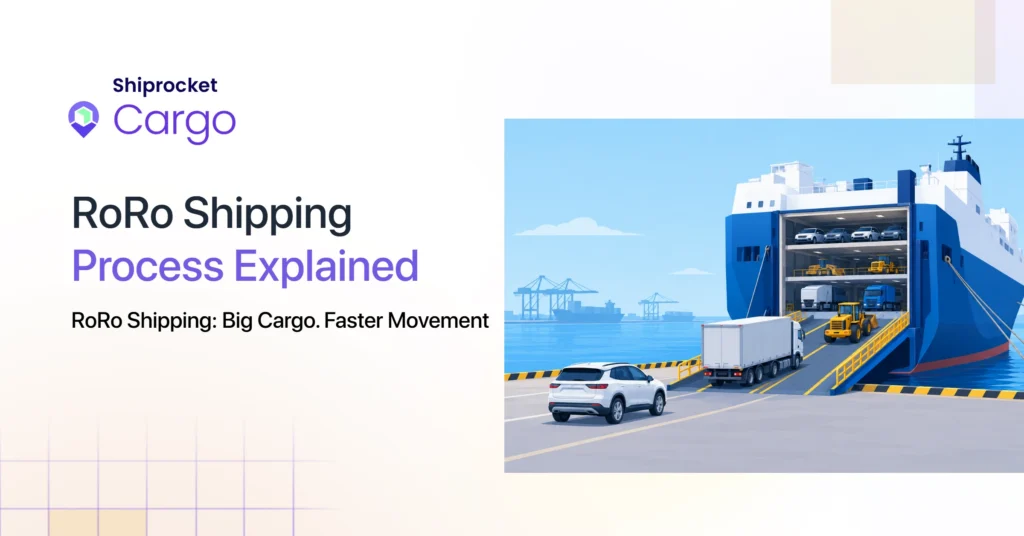
RoRo shipping stands for Roll-On/Roll-Off, a method used to transport vehicles and wheeled cargo across countries using specialised RoRo vessels.
It is used to ship cars, trucks, buses, trailers, heavy machinery and agricultural equipment internationally.
These ships are designed with built-in ramps and large decks where vehicles are parked securely for transport. This setup allows cargo to move in and out efficiently without cranes or container loading.
The term “Roll-On/Roll-Off” refers to the loading method, in which vehicles are driven or towed onto the ship via ramps and then rolled off at the destination port.
How Does RoRo Shipping Work?
RoRo shipping moves vehicles across the ocean through a structured process from port arrival to final delivery.
- Cargo Arrives at the Port: Vehicles, trucks, buses, trailers and heavy machinery arrive at the RoRo terminal for documentation checks and processing before loading begins.
- Loading Onto the Ship: Operational vehicles are driven onto the vessel using ramps, while non-moving cargo is placed on special trailers and towed onboard.
- Positioning Inside: Once onboard, cargo is arranged on designated decks based on size, weight and type. RoRo vessels have multiple interconnected decks with internal ramps.
- Securing the Cargo: Vehicles and machinery are secured using chains, straps and lashings to ensure stability during ocean transport.
- Arrival and Unloading: At the destination port, ramps are lowered, cargo is driven or towed off the ship and customs clearance is completed before onward movement.
What Are the Different Types of RoRo Vessels?
RoRo vessels are classified into different categories based on the type, size and weight of the cargo they carry.
- Pure Car Carrier (PCC): PCC ships are built to transport large volumes of passenger cars using enclosed decks designed specifically for vehicle safety.
- Pure Car and Truck Carrier (PCTC): PCTC vessels carry cars alongside heavier cargo, such as trucks, buses, trailers and light machinery, supported by stronger, adjustable decks.
- RoRo Cargo Ship: These ships handle mixed rolling cargo, such as agricultural machinery, construction equipment, industrial vehicles and oversized trailers, using reinforced decks and internal ramps.
- ConRo Ship: ConRo vessels combine container and RoRo transport, with containers on the upper decks and rolling cargo on the lower decks.
- RoLo Ship: RoLo ships use both roll-on ramps for wheeled cargo and cranes for non-rolling cargo, allowing mixed loading flexibility.
- Heavy Lift RoRo Vessel: These vessels are designed to handle extremely heavy cargo, such as mining equipment, industrial machinery and infrastructure components, with reinforced decks and ramps.
- RoPax Ship: RoPax vessels carry both passengers and vehicles, typically used on shorter regional ferry routes.
When Should You Use RoRo Shipping?
RoRo shipment should be used for cargo that is wheeled, oversized or rollable.
You should consider RoRo cargo when:
- You are shipping cars, trucks, buses, trailers or motorcycles internationally.
- You need to transport heavy machinery, construction equipment or mining vehicles.
- Your cargo is too large or heavy for standard container shipping.
- You regularly move large volumes of vehicles between ports.
- Your cargo can be driven, towed or loaded onto specialised trailers.
- You require direct transport of vehicles without container handling.
RoRo shipping is commonly used by automotive, construction, mining and agriculture industries because it is designed specifically for rolling and oversized cargo.
What Are the Benefits of RoRo Shipping?
RoRo shipping is effective because it is designed specifically to transport vehicles and wheeled machinery quickly and efficiently.
- Faster Loading and Unloading: Vehicles are driven directly onto the vessel via ramps, resulting in quicker loading and unloading than container-based shipping.
- Handles Heavy Cargo: It can transport large vehicles, construction equipment, buses and machinery that may not fit into standard shipping containers.
- Less Handling Needed: Cargo is rolled on and off rather than lifted by cranes, reducing handling time, labour and equipment requirements.
- Efficient for Large Volumes: RoRo vessels can carry hundreds of vehicles across multiple decks, making them suitable for large-scale automotive shipments.
- Reduced Port Time: Vehicles are loaded and unloaded in sequence via ramps, helping minimise congestion and waiting time at ports.
Reduce Transportation Costs with Shiprocket Cargo
Managing multiple freight partners often increases costs, causes delays and leads to inefficient routing and underutilised cargo space. As order volumes grow, logistics becomes more complex and expensive to handle manually.
Shiprocket Cargo helps solve this by bringing all shipping needs onto a single platform across India. Businesses can choose the right service based on shipment type, including LTL, PTL, FTL or air cargo, ensuring they only pay for the space they use. The platform also recommends suitable carriers, provides real-time tracking and helps schedule deliveries efficiently.
With access to 14+ cargo partners, coverage across 19,000+ pin codes and rates starting at INR 6/kg, Shiprocket Cargo helps businesses manage bulk transportation more cost-effectively, organised and scalable.
Conclusion
RoRo shipping is not just another logistics option; it is a practical solution built for businesses that move vehicles and heavy machinery across borders. If your operations involve cars, construction equipment or oversized cargo, choosing the right shipping method can directly impact your cost, delivery speed and efficiency.
The best shipping method is the one that best fits your cargo, not the one most commonly used. Understanding when to use RoRo versus containers or other freight options can help you avoid delays, reduce handling risks and improve overall supply chain performance.
For growing businesses, smarter shipping decisions often translate into faster expansion and better control over logistics costs.
Yes. Electric vehicles are regularly transported via RoRo shipping, but they undergo additional battery safety and inspection checks before loading to ensure safe transit.
No. While widely used for international transport, RoRo is also used on regional and coastal routes, especially for ferry-style services moving vehicles and freight between nearby ports.
Non-operational vehicles can still be shipped. They are loaded onto special towable trailers or equipment, as they do not need to be driven onto the vessel.
It is widely used by automotive, construction, mining, agriculture, defence and heavy equipment industries that regularly move large or wheeled cargo.
RoRo is preferred when speed, efficiency and ease of loading matter, especially for large or rolling cargo that may be difficult, inefficient or impossible to fit into standard containers.