- The pharmaceutical supply chain covers how medicines move from production to the end user.
- It involves different players, including manufacturers, distributors, logistics teams and retailers.
- Medicines need careful handling, especially when temperature and timing are important.
- For sellers, consistency is as important as speed.
- Working with reliable logistics support can help reduce losses and keep deliveries on track.
- What is the Pharmaceutical Supply Chain?
- Who are the Main Players in the Pharmaceutical Supply Chain?
- What are the Different Steps and Stages of the Pharmaceutical Supply Chain?
- What Should Be Prioritised in the Pharmaceutical Supply Chain?
- What are the Challenges Sellers Can Face in the Pharmaceutical Supply Chain?
- Optimise Pharma Distribution and Reduce Shipping Costs with Shiprocket Cargo
- Conclusion
A medicine can be perfectly made and still lose its value before it reaches the customer. Not because of the product, but because of what happens after it leaves the factory.
In India, getting medicines from one place to another involves multiple steps, and each one plays a role in keeping the product safe. At this scale, where the country supplies around 20% of the world’s generic medicines and the domestic market expected to cross USD 130 billion by 2030, even small gaps in handling or delays can have a much larger impact.
For sellers, this is where the focus shifts. The pharmaceutical supply chain is not just about stocking and selling. It is also about making sure every product reaches the same condition it was produced in.
A delay, a storage gap or exposure to heat may affect the medicine, and that directly impacts both your business and the end user.
What is the Pharmaceutical Supply Chain?
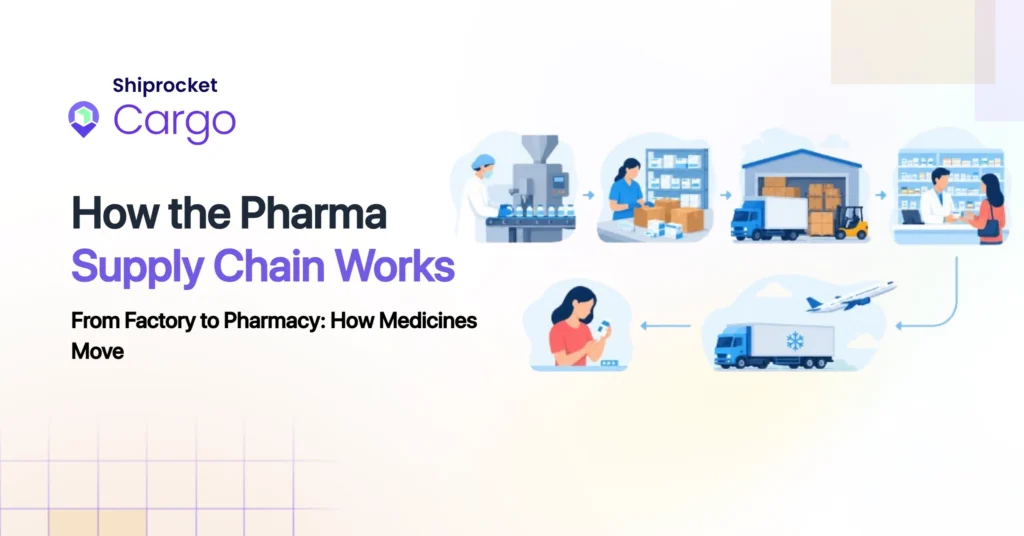
The pharmaceutical supply chain is the full path a medicine takes before it reaches the patient.
It starts at manufacturing and moves through storage, distribution and transportation before finally reaching a pharmacy, hospital or customer.
What makes it different from other supply chains is the level of care required, for example:
- Some medicines need to stay within 2°C to 8°C at all times
- Many products have strict expiry timelines
- Regulatory checks are involved at multiple stages
Because of this, even small gaps can create bigger problems. A delayed shipment or poor storage is not just an operational issue; it can affect the product itself.
Who are the Main Players in the Pharmaceutical Supply Chain?
A pharma supply chain works only when different players stay aligned. Each one has a specific role. These players include:
- Manufacturers: They produce medicines under strict quality and safety standards. This is where everything begins, so consistency here is crucial.
- Distributors and Wholesalers: They handle bulk movement and make sure products reach different regions. They play a key role in keeping supply steady across markets.
- Logistics Providers: They manage storage and transportation, and this can include maintaining temperature conditions, especially for sensitive medicines.
- Pharmacies and Hospitals: This is where medicines finally reach people. Whether they are available on time depends a lot on how smoothly the earlier steps were handled.
- Regulatory Bodies: They keep a check on safety and ensure the right processes are followed at every stage, so medicines remain safe and dependable.
For you as a seller, understanding how these roles connect helps you see where things can slow down or go wrong, and where you need to be more careful.
What are the Different Steps and Stages of the Pharmaceutical Supply Chain?
Here are the various stages of a pharmaceutical supply chain:
- Manufacturing
This is where everything starts. Medicines are produced under controlled conditions and checked thoroughly before they move out.
- Storage
After production, medicines are stored in warehouses. The conditions depend on the product. Some need refrigeration, while others must be kept in dry, stable environments.
- Distribution
From there, products are sent in bulk to distributors or regional hubs so they can be made available across different places or locations.
- Transportation
Medicines move across cities and states and usually covering long distances and dealing with changing weather. This is where careful handling becomes important to keep the product safe throughout the journey.
- Last-Mile Delivery
This is the final step when medicines reach pharmacies or hospitals. Any delay here can affect availability, especially when the demand is urgent.
What Should Be Prioritised in the Pharmaceutical Supply Chain?
If you are managing pharma distribution, here are the things that matter more:
- Temperature Control
Certain medicines cannot tolerate even slight temperature changes. Maintaining consistency during storage and transport is essential.
- Compliance
Documentation, labelling and approvals are not optional. They are part of the process. Any missing details can lead to delays or penalties.
- Traceability
You should be able to track where each batch came from and where it is going. This becomes important during recalls or quality checks.
- Timely Movement
Timely delivery is important and delayed shipments can disrupt supply, especially for essential medicines.
- Inventory Balance
Holding too much stock increases expiry risk. Too little stock can lead to missed demand. Finding the balance is key.
What are the Challenges Sellers Can Face in the Pharmaceutical Supply Chain?
In day-to-day operations, things can get tricky, and sellers often run into these challenges:
- Temperature Management
Maintaining consistent conditions during long-distance transport can be difficult, especially in regions with extreme weather.
- Complex Regulations
Different rules and documentation requirements can slow things down.
- Higher Costs
Cold-chain logistics, specialised packaging and storage add to expenses.
- Changing Demand
Some medicines see sudden spikes in demand, while others move slowly.
- Expiry Risks
Unsold stock can expire and this can lead to losses that directly impact margins.
Optimise Pharma Distribution and Reduce Shipping Costs with Shiprocket Cargo
As your pharma business grows, handling logistics manually can start to slow things down. What worked at a smaller scale often becomes harder to manage when volumes increase, especially with strict handling and delivery requirements.
This is where having a more organised system makes a difference. Shiprocket Cargo helps you bring more clarity and control to how your shipments move.
With Shiprocket Cargo, you can:
- Handle bulk shipments without having to keep tracking everything manually
- Reach customers across different parts of India in a more consistent way
- Cut down delays by planning shipments a bit more carefully
- Keep shipping costs in check by choosing better routes and options
When your shipping process is more streamlined, you spend less time fixing issues and more time focusing on growing your business.
Conclusion
The pharmaceutical supply chain is not just about movement. It is about maintaining quality at every step.
From manufacturing to final delivery, each stage plays a role in ensuring that medicines remain safe and effective.
For sellers, this means paying attention to how products are stored, transported and delivered. It is not always about moving faster. It is about getting it right every time.
As the pharma market in India keeps expanding, having a dependable supply chain will matter even more.