- The retail supply chain management covers the delivery of goods, storage and even sourcing.
- Poor control over inventory can cost retailers billions across the globe.
- Good supply chains can enhance the delivery pace and lower stockouts.
- Structured logistics systems, such as Shiprocket Cargo, can enhance the B2B movement.
- What Is Retail Supply Chain Management?
- What Are the Key Components of Retail Supply Chain Management?
- What Are the Best 5 Strategies for Retail Supply Chain Management?
- How to Optimise Retail Supply Chain Management for the Best Results?
- What Are the Challenges of Retail Supply Chain Management?
- What Does the Future of Retail Supply Chain Management Look Like?
- Simplify B2B Logistics with Shiprocket Cargo
- Conclusion
Retail today moves fast, and customers expect products immediately, whether online or in-store. For many growing sellers outside major metros, delays in delivery, stockouts or mismanaged inventory can lead to lost sales, frustrated customers and shrinking profits.
Even minor inefficiencies in sourcing, storage or logistics can quickly add up, costing retailers more than ₹2,000 crore each year. With retail sales in India increasing by 9% in February 2026, understanding and optimising your supply chain is no longer just an operational task. It directly affects your ability to compete, scale and grow.
This blog will break down retail supply chain management, explain why it matters for your business and highlight practical ways to make your operations faster, more efficient and more profitable.
What Is Retail Supply Chain Management?
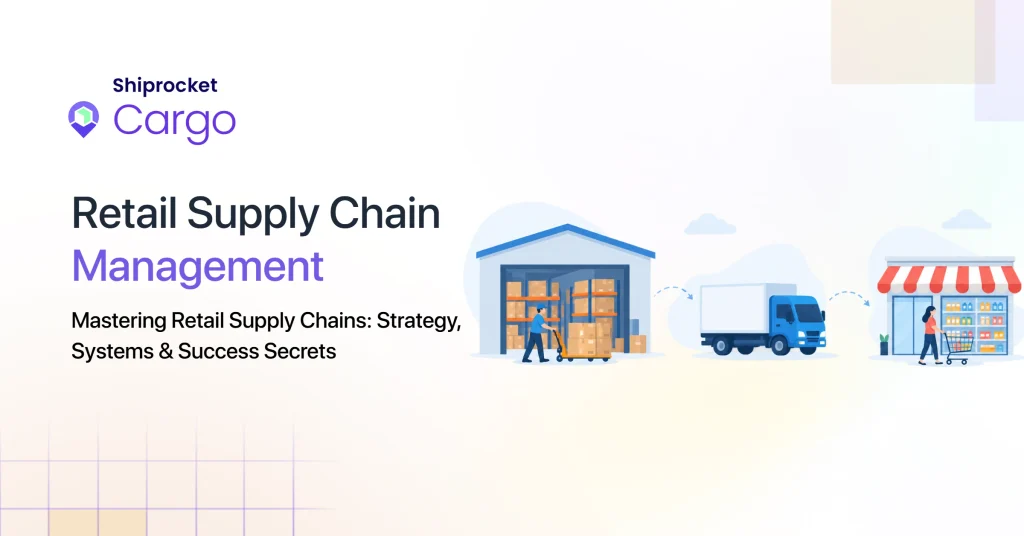
Retail supply chain management is the process of moving products from suppliers to consumers. It includes sourcing raw materials, managing inventory, warehousing and delivering products.
Beyond logistics, it ensures:
- Meeting demand without overstocking
- Making products available when customers want them
- Reducing unnecessary costs and delays
Modern retail supply chains are more complex, as online and offline sales now function together. Customers expect fast deliveries and flexible options like home delivery or store pickup. This shift increases pressure on sellers, requiring careful planning, accurate inventory tracking and fast movement of goods at every stage.
What Are the Key Components of Retail Supply Chain Management?
A retail supply chain functions as a connected system, with each component playing a crucial role:
- Procurement: This is the starting point. Retailers source products from suppliers or manufacturers, focusing on product quality, cost management and supplier reliability.
- Inventory Management: Inventory ensures products are available when needed. Poor control can lead to overstocking or stockouts. Globally, inventory mismanagement has caused over $568 billion in losses.
- Warehousing: Warehouses store goods before shipment. Modern retail increasingly uses micro-fulfillment centers and regional warehouses to reduce delivery time and improve efficiency.
- Order Fulfillment: This includes picking, packing and dispatching orders. With the growth of eCommerce, effective fulfillment has become critical.
- Logistics and Transportation: This moves goods from warehouses to consumers. Proper logistics ensures timely delivery and cost efficiency.
- Demand Forecasting: Retailers predict demand using consumer behaviour and seasonal trends. Accurate forecasting reduces waste and improves product availability.
What Are the Best 5 Strategies for Retail Supply Chain Management?
A strong supply chain relies not just on processes but on the right strategies. Key approaches include:
- Using Data for Demand Forecasting
Retailers rely on analytics to predict demand. Accurate forecasting reduces stock shortages and excess inventory.
- Opt for Omnichannel Fulfillment
Consumers expect flexibility. Offering options like store pickup and online delivery improves customer satisfaction and strengthens your retail operations.
- Strengthen Supplier Networks
Working with multiple suppliers reduces dependency on a single source, helping protect operations during disruptions.
- Focus on Inventory Visibility
Real-time tracking ensures you always know what stock is available and where. Greater visibility helps retailers respond quickly in fast-moving markets.
- Invest in Technology
Modern systems enhance efficiency and readiness for demand changes. Examples include:
- Real-time tracking systems
- AI-based demand forecasting
- Warehouse automation
How to Optimise Retail Supply Chain Management for the Best Results?
Optimisation means improving efficiency without raising costs unnecessarily. Key steps include:
- Lower Delivery Time
Consumers expect fast deliveries. Using regional warehouses can significantly reduce delivery time.
- Enhance Inventory Turnover
Faster inventory movement lowers storage costs and frees up capital for other business needs.
- Use Automation Wherever Possible
Automation speeds up processes and reduces errors. Examples include:
- Barcode tracking
- Automated sorting
- Monitor Performance Metrics
Track key indicators like inventory turnover, order fulfillment rate and delivery time. These metrics highlight areas that need improvement.
What Are the Challenges of Retail Supply Chain Management?
Even with modern advancements, retail supply chains face key challenges:
- Demand Uncertainty: Consumer demand can shift quickly due to seasonal changes or trends, making planning difficult.
- Rising Expenses: Increasing logistics costs and fuel prices directly affect profit margins.
- Supply Disruptions: Global events, trade issues or conflicts can delay shipments, impacting operations. Several reports have shown that supply-based delays are affecting countless retailers.
- Inventory Imbalance: Too much or too little stock creates inefficiencies. Maintaining the right balance is crucial to avoid losses and meet demand.
What Does the Future of Retail Supply Chain Management Look Like?
Retail supply chains are evolving rapidly. Key trends include:
- Growth in Logistics: The global retail logistics market is expanding, expected to reach $1.49 trillion by 2030.
- Automation: Warehouses are increasingly adopting automated systems and robotics to boost efficiency.
- Flexibility: Retailers are building adaptable supply chains that can respond quickly to changes.
- Regional Networks: Businesses are reducing reliance on global sourcing and placing more emphasis on local suppliers.
Simplify B2B Logistics with Shiprocket Cargo
Handling bigger shipments along with bulk orders can be demanding for many businesses. To make things easier, platforms like Shiprocket Cargo become a lifesaver. It provides a well-structured approach to B2B logistics and lets you do the following:
- Handle bulk shipments efficiently across multiple locations.
- Manage high-volume orders without operational confusion.
- Reduce transit delays through structured logistics processes.
- Track deliveries in real time, improving visibility and control.
Conclusion
Effective retail supply chain management is more than just moving products; it directly impacts your sales, customer satisfaction and profitability. By focusing on faster deliveries, smart inventory control and efficient logistics, you can stay competitive and build trust with your customers.
Tools like Shiprocket Cargo make managing bulk orders and B2B shipments simpler, helping you reduce delays, improve visibility and scale your business smoothly.