How to Find Reliable Manufacturers in India: What Sellers Need to Know
- The right manufacturer directly impacts product quality, delivery speed, customer experience and long-term business growth.
- Clear product requirements, supplier research and sample testing help avoid costly sourcing mistakes.
- Don’t choose manufacturers solely on price; reliability, communication and consistency matter just as much.
- Watch for red flags such as poor communication, unclear business details, unrealistic pricing or pressure to place large bulk orders.
- Strong manufacturer relationships help ensure smoother scaling and fewer operational issues over time.
- Shiprocket Cargo simplifies bulk shipping across India with organised freight solutions, real-time tracking and multiple cargo options on one platform.
Behind every smoothly running online business is a manufacturer that keeps products moving on time. For small and growing online sellers, a single delayed shipment or an inconsistent batch can quickly turn into cancelled orders, negative reviews and lost repeat customers. That is why choosing the right manufacturing partner is not just an operational decision; it directly affects your reputation and sales.
In India, the manufacturing sector is growing rapidly and is expected to reach USD 1 trillion in value. This opens up significant opportunities across categories such as fashion, beauty, electronics and home décor. For sellers trying to build a stable income online, this means more options, but also more confusion about whom to trust.
Most businesses make the mistake of choosing manufacturers solely on price, which often leads to quality issues and unpredictable supply. What actually matters is reliability, communication and consistency in delivery.
In this section, we’ll break down how to identify and find manufacturers in India, what factors really matter for your business and how to avoid costly sourcing mistakes early on.
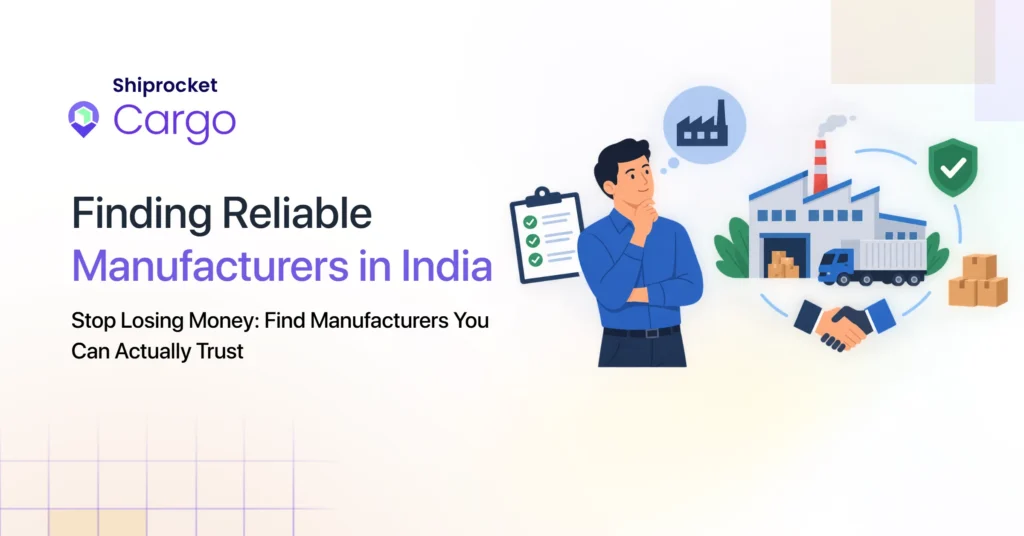
How to Connect with Trustworthy Manufacturers: Step-by-Step Guide
Follow this step-by-step guide to find manufacturers in India:
- Know What You Need
Don’t contact manufacturers without clarity. Define your product specifications, materials, packaging requirements, quality standards, budget and expected order quantity. This helps suppliers provide accurate quotes and makes comparisons much easier, rather than relying on incomplete information.
- Find the Right Manufacturing Hubs
India has specialised production hubs, and choosing the right one increases your chances of finding experienced suppliers. For example:
- Garments and textiles: Tiruppur
- Jewellery and handicrafts: Jaipur
- Metal products: Moradabad
- Home furnishings: Panipat
- Leather goods: Kanpur and Chennai
Selecting the right hub helps improve pricing, quality and production timelines.
- Use Trusted Supplier Platforms
Instead of random searches, use B2B platforms and trade directories. These provide supplier ratings, certifications, reviews and export history, helping you shortlist manufacturers more reliably. Many also support smaller order quantities suited for online sellers.
- Shortlist Manufacturers Carefully
Don’t select the first option. Compare based on:
- Export experience
- Production capacity
- Product category expertise
- Certifications and compliance
- Packaging capabilities
- Minimum order quantity
- Delivery timelines
- Verify Certifications and Business Details
Check business licenses and certifications to ensure quality and safety standards are met, especially for regulated or export-focused products. Common certifications include ISO certifications, GOTS for organic textiles and product safety compliance documents. Also, ask for past client references or examples of previous work.
- Evaluate Communication Quality
Communication is a strong indicator of reliability. Good manufacturers usually:
- Respond quickly
- Explain processes clearly
- Ask relevant follow-up questions
- Confirm specifications accurately
- Share consistent updates
This becomes critical for bulk and customised orders.
- Request Product Samples
Never place bulk orders without samples. Samples help you evaluate quality, material durability, finishing, packaging and consistency. Poor or delayed samples often indicate larger production issues.
- Compare Pricing the Right Way
Don’t choose only based on the lowest price. Consider:
- Material quality
- Packaging costs
- Shipping charges
- Sampling fees
- Production timelines
- Hidden costs
A slightly higher price from a reliable supplier often reduces long-term losses.
- Conduct Factory Verification
Verify manufacturing capability through factory visits or video calls. This helps assess machinery, manpower and production setup. If travel is not possible, third-party inspection services can be used.
- Start With a Small Trial Order
Begin with a small order to test consistency, delivery timelines, packaging quality and communication. Once performance is proven, you can confidently scale order quantities.
What Are Some Red Flags Sellers Should Look Out For?
Not every manufacturer that looks polished online is reliable. Spotting warning signs early can save you from delays, poor quality and financial loss later.
- Focus Only on Low Cost, Not Quality: If a manufacturer is only concerned with low pricing and ignores quality, delivery timelines and raw materials, it is a major red flag. Low upfront costs often lead to defective products, delays and greater losses later.
- Poor or Slow Communication: If a supplier takes too long to respond or gives unclear answers to basic questions, working with them during production will likely become stressful. Communication issues at the start usually get worse during bulk orders.
- Reluctance to Share Details: Be cautious if a supplier avoids sharing certifications, business credentials, factory images or previous work samples. Reliable manufacturers are usually transparent about their processes and proof of work.
- Low-Quality or Inconsistent Samples: Samples should meet expected quality standards. If you notice poor finishing, weak stitching, damaged packaging or a mismatch with what was promised, it often becomes worse in bulk production, not better.
- Pressure for Large Orders: Suppliers pushing you to place large orders quickly with unrealistic discounts are a warning sign. Professional manufacturers allow time for sample evaluation and decision-making.
- No Factory Access or Verification: If a manufacturer refuses factory visits or any form of inspection, it raises concerns. Genuine manufacturers are open to verification of their setup and capabilities.
- Unclear or Missing Written Agreements: All terms, pricing, payment schedules, delivery timelines and order details should be documented in writing. Relying on verbal agreements can lead to disputes later. Frequent changes in pricing or delivery terms during negotiation are also red flags.
Streamline B2B Logistics with Shiprocket Cargo
Growing your business becomes difficult when dealing with bulk cargo deliveries on your own. It often leads to delays, higher costs, lack of visibility and confusion when working with multiple freight partners.
Shiprocket Cargo brings bulk transportation, tracking and logistics services under a single platform. You can choose the right shipping mode based on your requirement, such as LTL, PTL, FTL or air cargo, depending on shipment size and urgency.
The platform helps you select suitable courier options based on your needs and allows delivery scheduling by booking appointments, rather than dealing with unpredictable timelines. With coverage across 19,000+ PIN codes in India, it simplifies large-scale inventory movement.
Overall, it makes bulk shipping more organised, faster and easier to manage.
Conclusion
A customer placing an order is the easy part. The real pressure starts when you have to make sure the product actually reaches them on time, in good condition and without any complaints. That entire experience depends on one decision you make early on: your manufacturer.
A good manufacturer is not just a supplier; it is the backbone of your business operations. When production is consistent and reliable, you spend less time fixing issues and more time focusing on growth, new orders and customer experience. When it is not, even small delays or quality gaps can quickly turn into lost customers and negative reviews.
Strong manufacturing partnerships create stability. And with stability in place, scaling your business stops feeling chaotic and starts becoming predictable.
In addition to production costs, you should budget for samples, packaging trials, shipping and basic quality inspections. It’s also wise to keep a buffer for unexpected changes in raw material costs, rework or delays during the first few orders.
Yes, many manufacturers support private labelling, custom packaging, logo printing and product modifications. This helps sellers build a distinct brand identity rather than compete with generic, unbranded products.
Relying on a single manufacturer can create risk. If there are delays, quality issues or capacity limits, your entire supply chain can be affected. Having at least one backup supplier helps maintain continuity during unexpected disruptions.
A common mistake is focusing only on the lowest price. While it may look cost-effective initially, it often leads to inconsistent quality, delays and weaker customer trust, which affects repeat business and long-term growth.
Manufacturing cycles slow down during peak seasons and holidays. Early planning helps you avoid stock shortages, manage lead times better and ensure product availability when demand increases suddenly.